
A real Herndon swap: subway to square
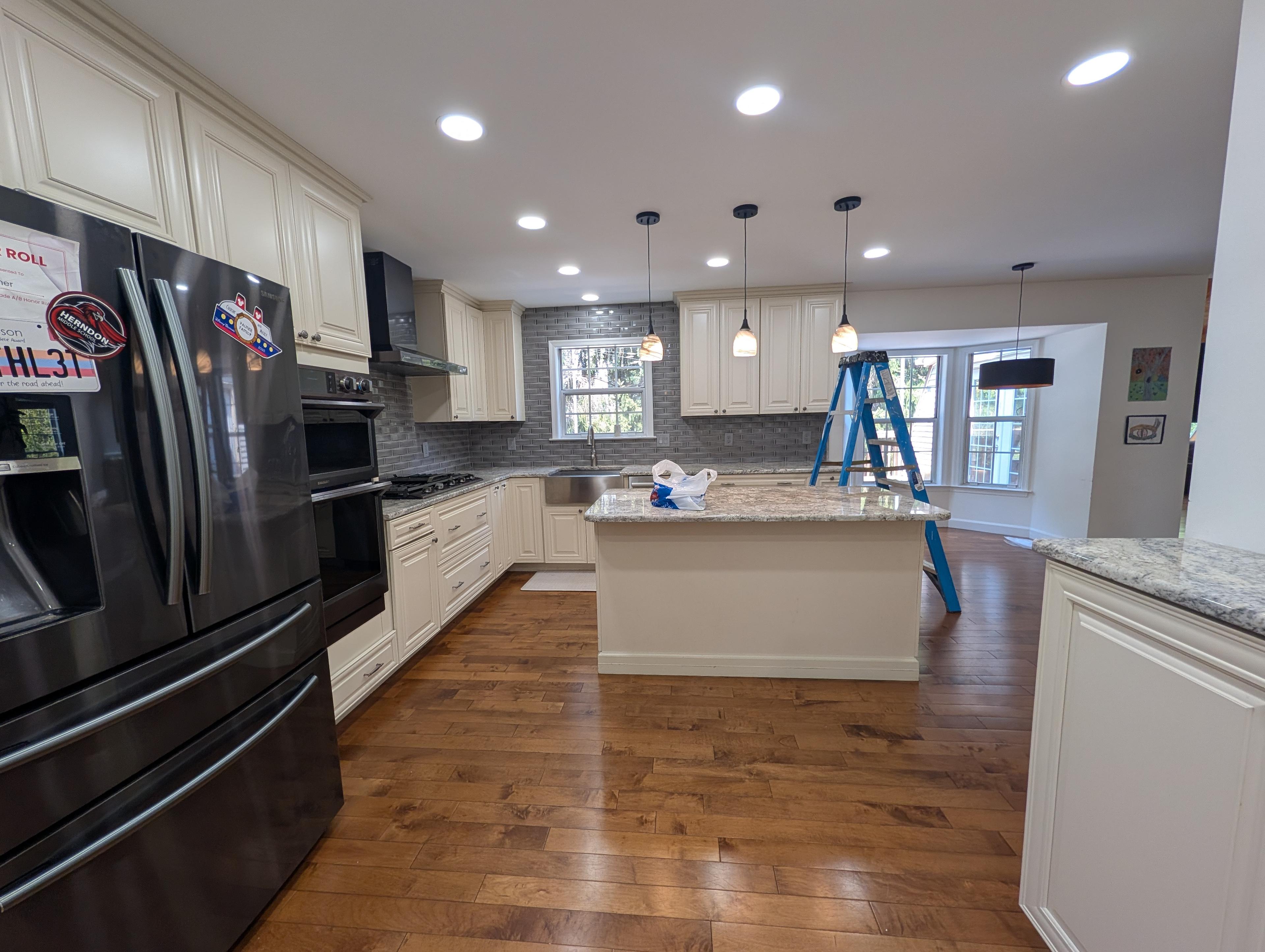
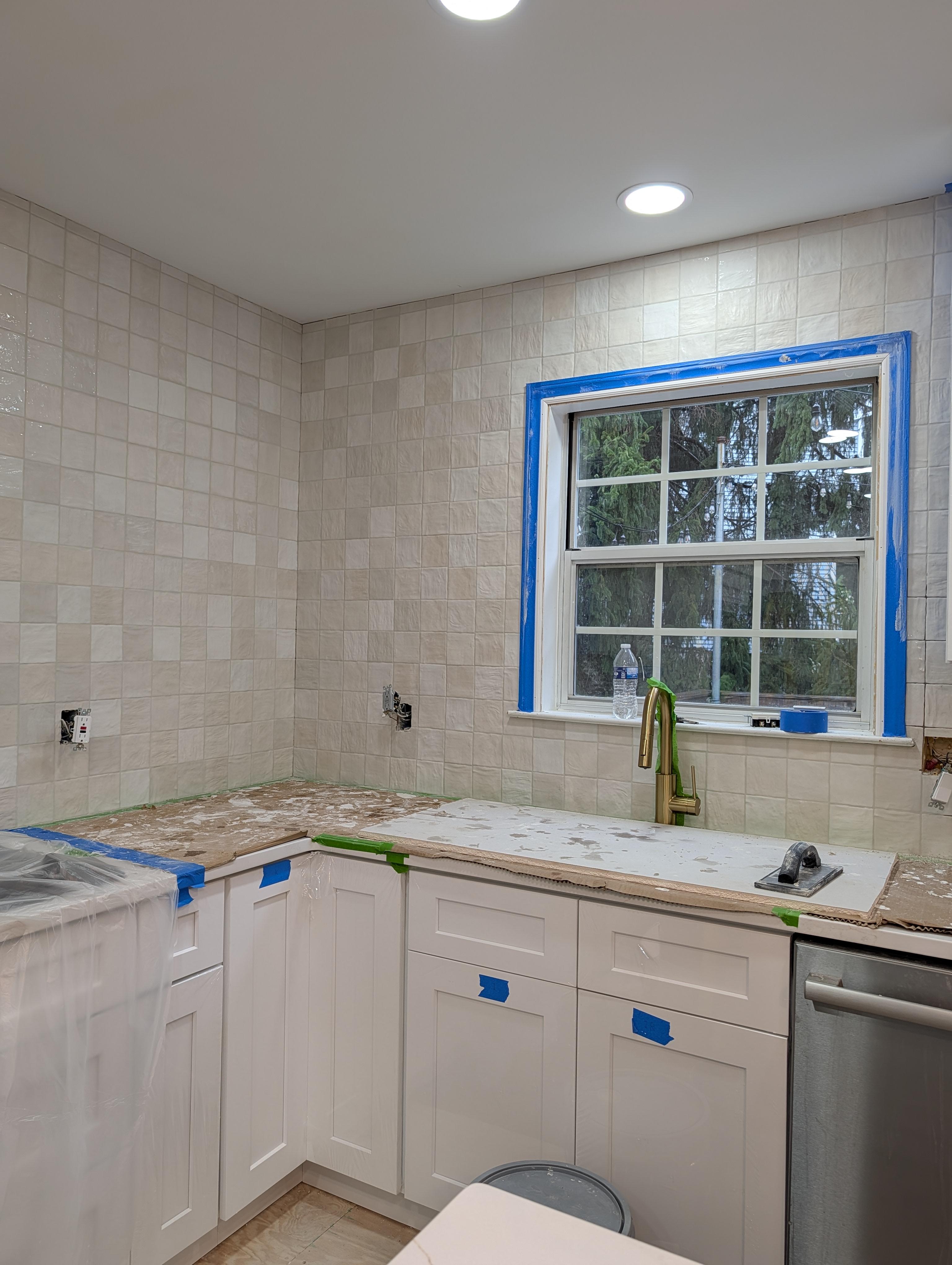
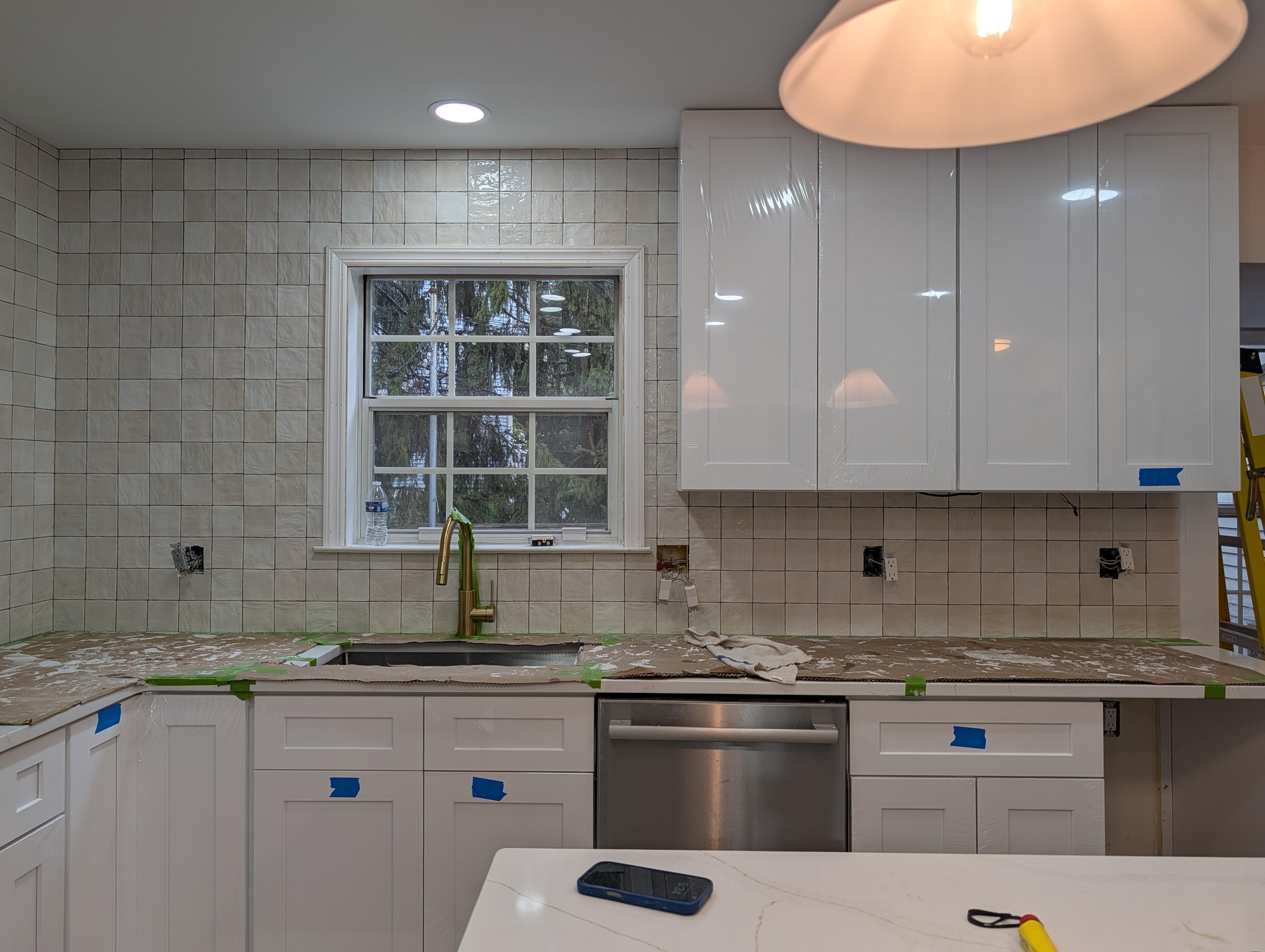
The second Herndon kitchen on this site had a gray subway tile backsplash with cream cabinets and granite. The new kitchen uses a square tile backsplash with white shaker cabinets and quartz, including behind the gas cooktop. Same wall, very different look.
Choose the backsplash last
Pick cabinets and countertop first, then choose tile against real samples of both. A countertop with strong veining often looks best with a quiet tile; a plain quartz top can carry more pattern in the backsplash. Look at samples in your kitchen's actual light, day and evening.
Tile shapes and layouts
- Subway (rectangular): classic and flexible; can be laid in a running bond, stacked, or in a herringbone
- Square: clean and graphic; stacked square tile reads modern, offset reads more traditional
- Large-format: fewer grout lines and easier to wipe, but needs a flat wall
- Mosaic: lots of detail and lots of grout, best in small doses such as behind a range
Material basics
Ceramic and porcelain are the most common backsplash materials: durable, easy to clean and available in endless colors. Glass tile reflects light but shows grout and edge cuts. Natural stone tile is beautiful but usually needs sealing, especially behind the range and sink. We'll show you options during selections and talk through upkeep.
Grout and edges
Grout color changes the look as much as the tile. Matching grout makes the surface read as one; contrasting grout emphasizes the pattern. Lighter grout shows stains sooner behind a cooktop. Decide how the tile will end where it meets a wall, cabinet side or window, since exposed edges need a finished edge piece or trim.
Height, outlets and windows
- Standard height runs from countertop to the underside of the upper cabinets
- Behind a range hood or open shelving, tile can run higher or to the ceiling
- Outlets and switches in the backsplash should be laid out with the tile so they don't land on awkward cuts
- Under-cabinet lighting shows every bump in the tile, so a flat install matters
Older walls, like many in Herndon
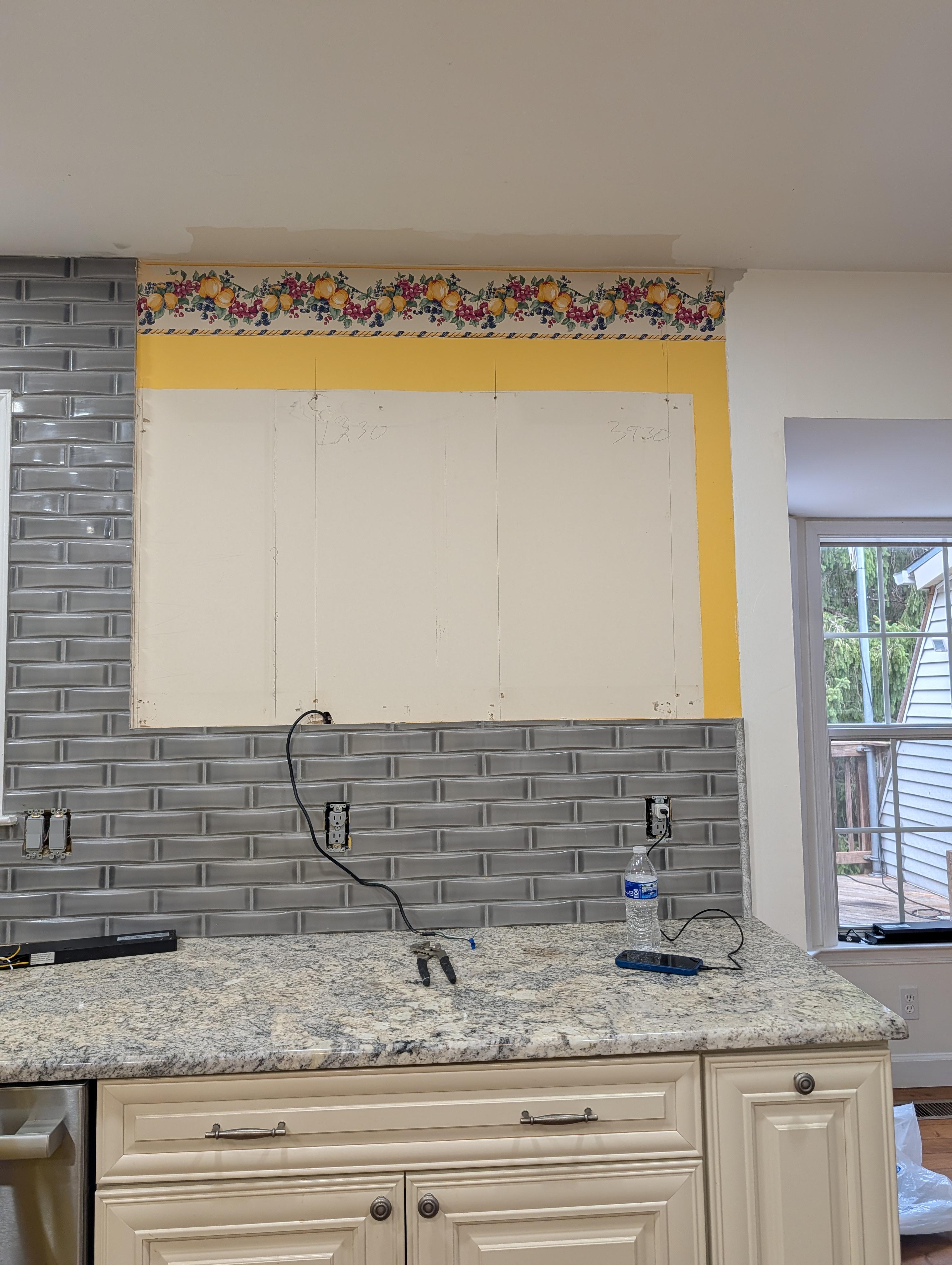
When old tile comes off, what's underneath isn't always ready for new tile. In the Herndon project, demolition revealed an old wallpaper border and patched drywall. Walls get repaired and flattened before new tile goes up; this prep is part of a proper backsplash install.
Cleaning and upkeep
Behind the range and sink, the backsplash gets splattered daily. Glossy and glazed tile wipes clean easily; matte and textured surfaces hide water spots but can hold grease. Smaller tile means more grout, and grout is what discolors first. If you cook often, consider a larger tile or a tighter grout joint in the cooking zone, and ask about grout options that resist staining.
Coordinating with lighting and outlets
Under-cabinet lights skim across the tile surface, which flatters texture and exposes uneven installation. Outlets and switches should be placed with the tile layout in mind, so cover plates sit on full tiles or centered on grout lines rather than on slivers. If outlets are moving, that's electrical work handled before tile goes up.
Budget thinking
The backsplash is a small area, so a more expensive tile can be within reach. Labor for intricate patterns, mosaics and many outlet cuts adds up faster than material. Kitchen Kings doesn't publish a separate backsplash range; backsplash is part of the countertop and full-remodel scopes in our cost guide.
Permits
Fairfax County lists replacement of tiles among residential work that doesn't need a permit. Moving outlets in the backsplash is electrical work, which is different. Inside the Town of Herndon, confirm with the Town's Building Inspections office.
Should the backsplash match the countertop?▸
It should work with it. Pick the countertop first, then choose tile against a real sample.
Is subway tile still a good choice?▸
Yes, it's versatile. Changing the layout, size or grout color can make it look very different.
Can you tile over my existing backsplash?▸
We usually recommend removing old tile so the wall can be checked and flattened, as in the Herndon project where old wallpaper and patches were behind the tile.